
From Athlete to Influencer: How NIL is Reshaping College Sports
For generations, college sports operated under a simple idea: athletes were students first and competitors second. They played for the love of the game, the pride of representing their school, and the opportunity to earn a college education. At least, that was the narrative.
Behind the scenes, however, college athletics had quietly become a massive business. Television contracts were worth billions, stadiums were packed every weekend, and universities built entire brands around their athletic programs. Yet the athletes at the center of it all were restricted from earning money from their own name, image, or likeness. While coaches signed multi-million-dollar contracts and schools profited from media deals, the players generating the attention were expected to remain amateurs.
That system changed in 2021 when college athletes were finally allowed to profit from their Name, Image, and Likeness — commonly known as NIL. Almost overnight, athletes began signing endorsement deals, building social media brands, and partnering with companies in ways that had long been prohibited.
What began as a push for fairness quickly evolved into something much larger. NIL has reshaped recruiting, accelerated the growth of athlete branding, and introduced financial dynamics that sometimes resemble professional sports more than traditional college athletics.
Supporters argue that NIL corrects a long-standing imbalance by allowing athletes to benefit from the value they create. Critics, however, worry that the system is moving college sports further away from its traditional identity.
To understand NIL's impact, it is important to examine how the amateur system developed, how athlete identity has changed, and what these changes may mean for the future of college sports.
The Legal Shift That Changed College Sports
For decades, the NCAA enforced a strict model of amateurism. Student-athletes could receive scholarships covering tuition, housing, and meals, but they were prohibited from earning money beyond those benefits — even from their own name or image.
The NCAA defended this system by arguing that amateurism preserved the educational focus of college sports. According to this logic, paying athletes would undermine the integrity of collegiate competition.
But this reasoning raised an obvious question: why couldn't athletes pursue both education and compensation?
Students in other fields have always been allowed to profit from their skills while in school. A music student can perform paid concerts, an art student can sell paintings, and a business student can launch a startup. Only athletes were restricted from earning money from the talents that brought them to campus.
As college sports grew into a multi-billion-dollar industry, this contradiction became increasingly difficult to defend.
Legal challenges began to expose the system's flaws.
One major turning point came in 2014 with O'Bannon v. NCAA, when former UCLA basketball player Ed O'Bannon sued after discovering his likeness was used in EA Sports college basketball video game without compensation. The case highlighted the contradiction of the NCAA profiting from athletes' identities while preventing them from doing the same.
Momentum continued in 2021 with the Supreme Court's NCAA v. Alston ruling that the NCAA could not restrict certain education-related benefits for athletes. Although the case focused on academic compensation, it signaled growing legal skepticism toward NCAA restrictions.
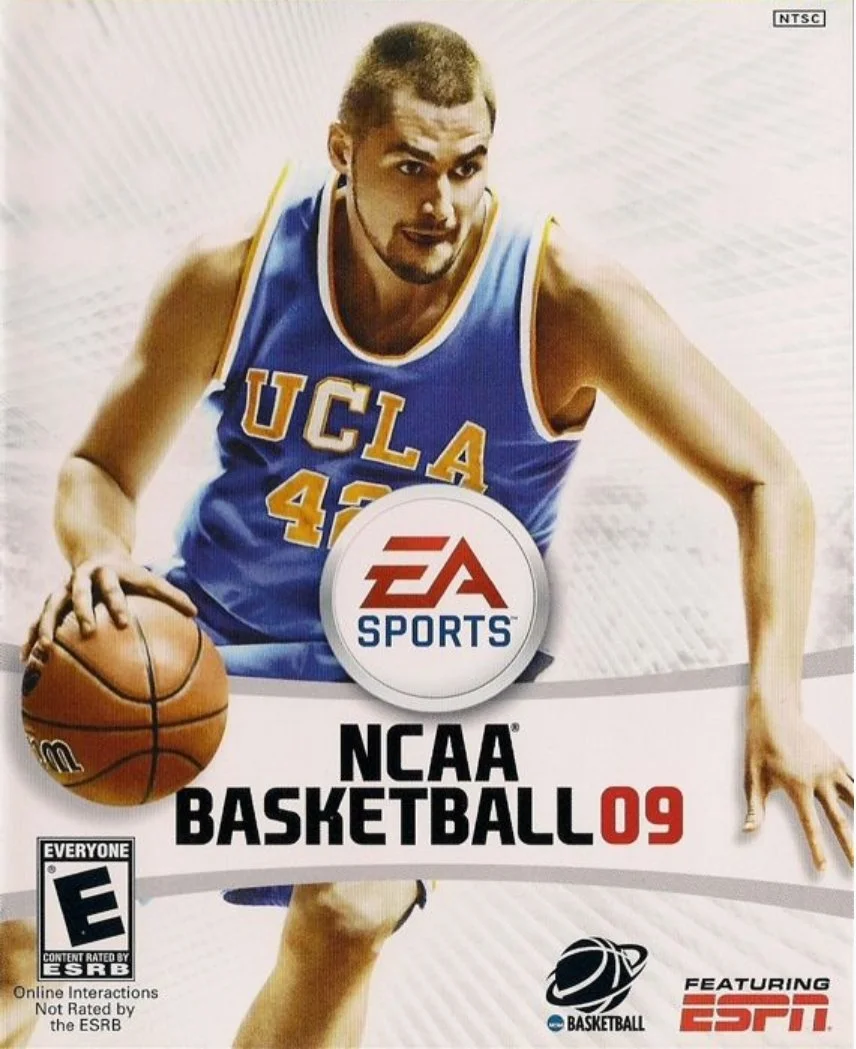
(Front Cover for NCAA Basketball 09)
Soon after, several states passed laws allowing athletes to profit from their Name, Image, and Likeness. Facing pressure from state legislation and court decisions, the NCAA adopted an interim policy on July 1, 2021, allowing athletes to earn money through endorsements, sponsorships, and other opportunities.
This decision ended decades of strict amateurism and opened the door to a new era of college athletics.
The Rise of the Athlete Brand
One of the most visible consequences of NIL has been the rise of athlete branding. College athletes are no longer just representatives of their universities; many are becoming brands themselves. In the past, an athlete's identity was largely tied to their school. Their visibility and opportunities depended heavily on the success and exposure of their program.
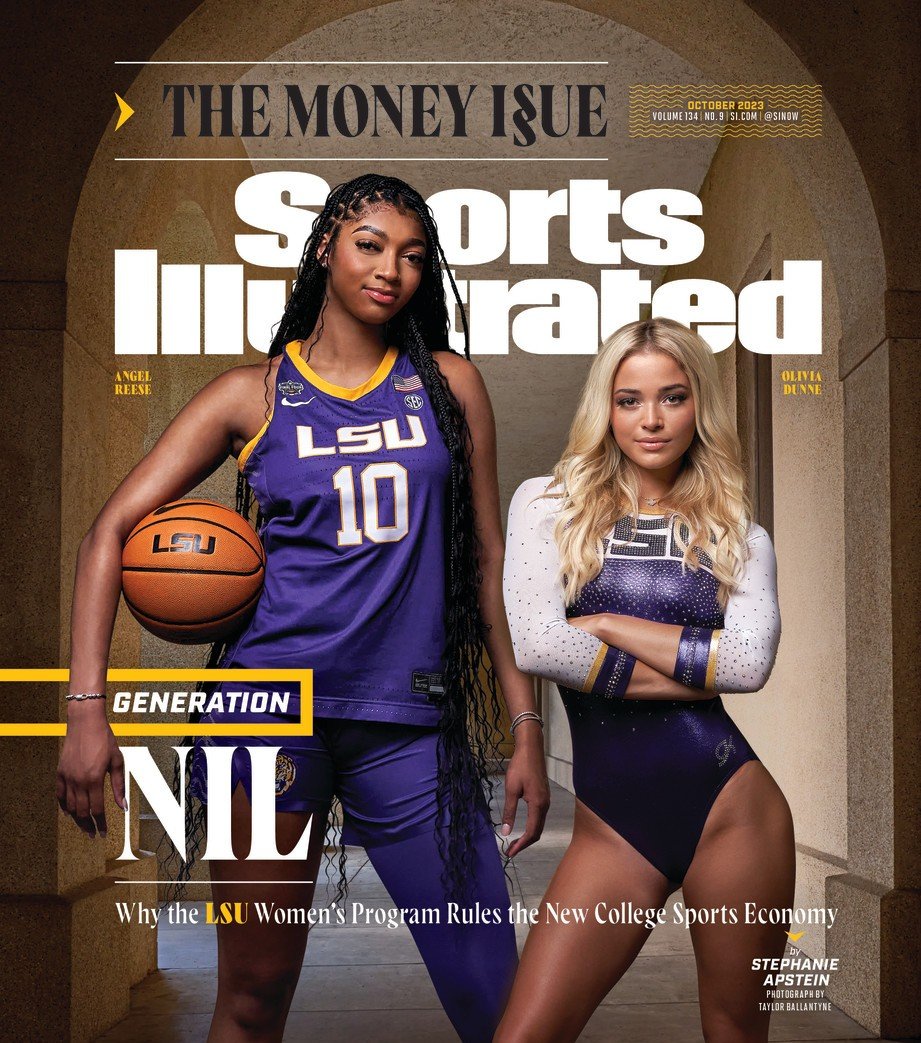
(LSU forward Angel Reese and Gymnast Olivia Dunne, October 2023 Sports Illustrated Cover | Source)
Another example is Arch Manning, the quarterback for the Texas Longhorns. Because of his famous football lineage and the media attention surrounding him, Manning entered college with enormous brand value. He secured NIL partnerships with companies such as Warby Parker, Red Bull, EA Sports, and Raising Cane's early in his career before even fully establishing himself on the field.
These examples highlight a significant shift: college athletes are no longer defined solely by their teams. They are building independent identities and business opportunities.
But athlete branding is only part of NIL's impact. The policy has also transformed one of the most important aspects of college sports — recruiting.
Recruiting in the NIL Era
NIL has begun to shift that dynamic by allowing athletes to build personal brands that extend beyond their teams.
With social media followings and endorsement deals, some athletes now operate in ways that resemble professional influencers or entrepreneurs.
Few athletes illustrate this change better than Olivia Dunne, the former LSU gymnastics star who has become one of the most recognizable figures in college sports. Known widely as "Livvy," Dunne built a massive social media following that translated directly into NIL opportunities. She has partnered with brands such as Nautica, Vuori, NOBULL, and Accelerator Active Energy, turning her online presence into a profitable personal brand.
Dunne has also used her influence to launch the Livvy Fund, an NIL collective designed to create endorsement opportunities for other female athletes at LSU. Her success demonstrates how NIL rewards not only athletic performance but also visibility, personality, and digital engagement.
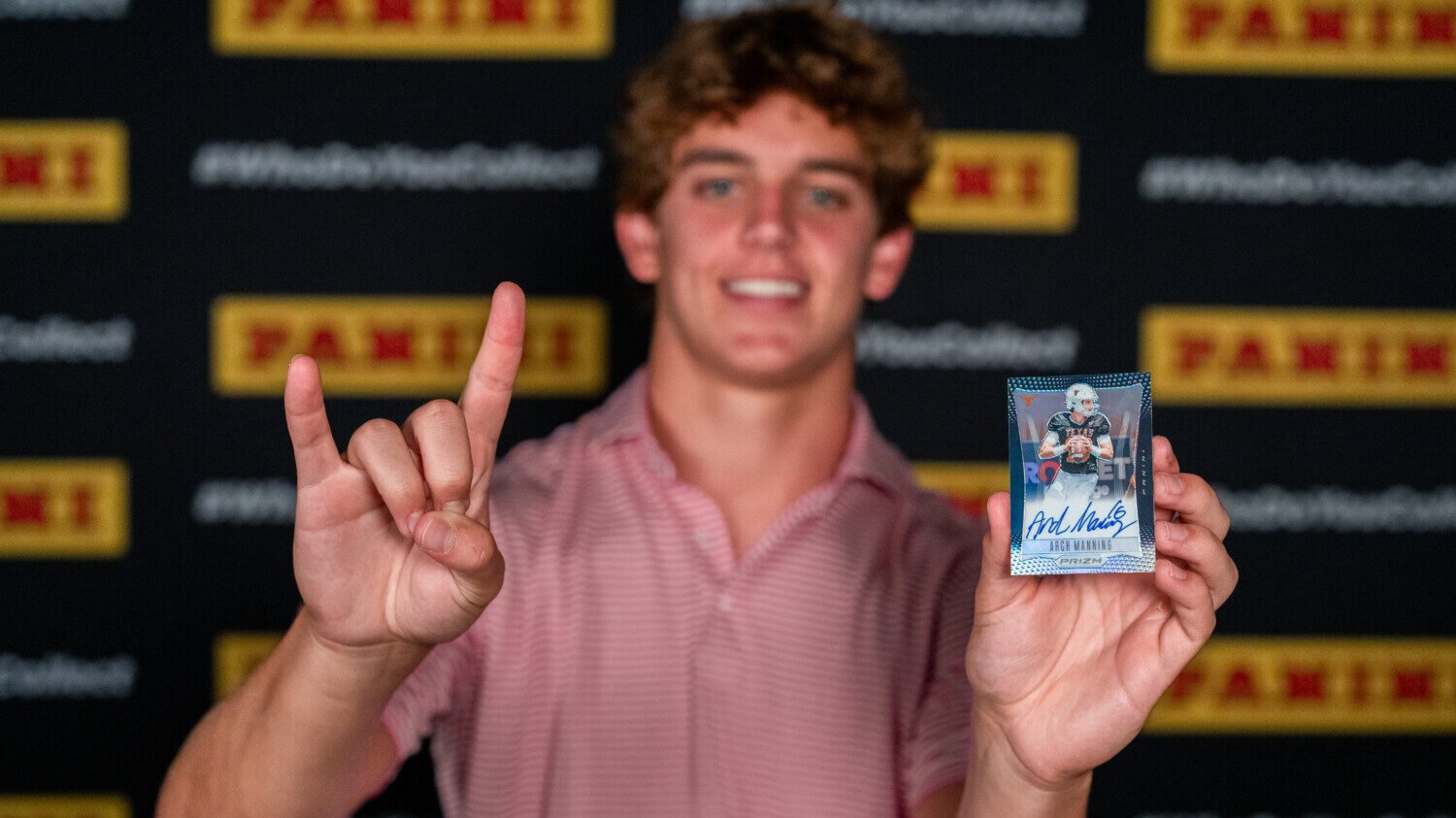
(Arch Manning signing exclusive NIL trading card deal | Source)
While NIL was originally framed as a tool for athlete empowerment, it has also changed the way recruiting works.
One major development has been the rise of NIL collectives. These organizations are typically funded by alumni, boosters, and supporters who want to help their schools remain competitive. By pooling donations, collectives create endorsement opportunities for athletes through appearances, partnerships, and promotional work.
In theory, collectives exist to connect athletes with legitimate marketing opportunities. In practice, they often function as organized funding groups designed to attract and retain talent.
Because these organizations operate outside athletic departments, their structures and levels of transparency can vary widely. Some collectives clearly outline how funds are distributed, while others operate with far less oversight.
The impact of collectives becomes even more significant when combined with the NCAA Transfer Portal. The portal was originally introduced to give athletes more freedom to transfer schools without strict penalties.
However, when NIL opportunities are part of the decision-making process, the system can resemble professional free agency. Athletes can enter the portal, compare financial opportunities across schools, and choose the program that offers the most attractive overall package.
As a result, player movement has increased significantly. Many programs now see large portions of their rosters change from year to year as athletes transfer in search of better opportunities.
While this mobility gives athletes greater control over their careers, it also introduces new pressures and incentives that previously did not exist in college sports.
Redefining the "Student-Athlete"
Beyond financial and recruiting changes, NIL has sparked a broader cultural shift in how college athletes are viewed. For decades, the NCAA emphasized the idea of the "student-athlete," a term meant to highlight education first and athletics second. But as NIL opportunities have expanded, that identity has started to evolve.
Today, many college athletes manage responsibilities that resemble those of professionals. In addition to practices, games, travel schedules, and academics, athletes must now handle endorsement deals, social media content, and brand partnerships.
Building a personal brand has become another responsibility layered onto an already demanding schedule.
Financial incentives can also influence decisions that were once based primarily on athletic development or team fit. NIL opportunities may affect where athletes choose to play, whether they remain at a program, or when they decide to transfer.
As a result, the line between college athletics and professional sports continues to blur.
This shift has also changed how teams are built. In the past, programs often relied on recruiting players and developing them over several years. But rosters now can change dramatically from season to season due to transfers and new NIL opportunities.
Legendary football coach Nick Saban reflected on this transformation when he said,
““All the things that I believed in, for all these years, 50 years of coaching, no longer exist in college athletics. It was always about developing players… helping people be more successful in life.””
Whether this shift strengthens or weakens college sports remains a subject of debate. What is clear is that the traditional definition of the student-athlete is changing.
Opportunity and Uncertainty
So, has NIL made college sports better or worse?
In many ways, NIL has corrected a long-standing imbalance. College athletics generate billions of dollars through television contracts, sponsorships, ticket sales, and merchandise. For decades, athletes were central to this system but had little control over the economic opportunities connected to their performance.
NIL finally gave athletes the ability to benefit from the value they help create. For many athletes, this income can help cover living expenses, support family members, or prepare financially for life after college.
One of the most positive outcomes of NIL has been its impact on women's sports. Female athletes have become some of the most successful figures in the NIL era, often building large followings and securing major brand partnerships.
At the same time, the system has introduced challenges. The biggest issue is not that athletes are being compensated but that NIL was introduced with limited structure or oversight.
Without consistent national regulations, schools, boosters, and collectives have been forced to navigate a system that sometimes lacks transparency. The financial competition between programs has also intensified, with wealthier schools able to offer far greater opportunities. These changes have forced college athletics to confront a deeper question about its identity.
A New Era of College Athletics
The introduction of NIL has fundamentally changed college sports. What was once a system defined by strict amateurism has evolved into one where athletes can build personal brands, sign endorsement deals, and take advantage of opportunities that were once impossible.
In many ways, this shift corrected a long-standing imbalance by allowing athletes to benefit from the value they help create. At the same time, NIL has introduced new challenges for universities, athletes, and the NCAA. Recruiting dynamics, financial incentives, and player movement have created a system that often resembles professional sports.
Yet returning to the old system is neither realistic nor fair. The debate is no longer about whether athletes should be compensated; it is about how the system should evolve moving forward.
Economist Joseph Schumpeter describes times like this as,
“Creative destruction,” a process in which innovations dismantle long-standing systems and replace them with new ones, like a set of LEGO pieces taken apart and rebuilt into something entirely different.”
This is exactly what is happening in college athletics.
The traditional model of amateurism is being dismantled, piece by piece. Whether this transformation ultimately strengthens or reshapes college sports remains to be seen. What is clear is that the structure of college athletics is being rebuilt in real time.
The athletes who once had the least control in the system are shaping what comes next.